
Local Offer (SEND)
The purpose of the local offer is to improve choice for families, by providing information about services available at our settings for young children who have special educational needs and/or disabilities (SEND).
Wivenhoe Pre-School strives to meet the needs of children with Special Educational Needs and disabilities. We aim to support children to become confident with their abilities, be able to communicate their own views and ensure their transition to preschool is as seamless as possible.
We are an inclusive setting, we have well trained staff with a wealth of knowledge and experience available to help support your child fully so that they are able to reach their full potential.
Questions Parents/Carers May Have
1. How does Wivenhoe Pre-School know if children need extra help and what should I do if I think my child may have special educational needs or disabilities?
At Wivenhoe Preschool we treat every child as an individual and staff are experienced in observing, assessing and planning next steps for children.
Your child will be allocated a key person who will be responsible for your child’s development. We use the Early Years Outcomes to assist us to assess the children. The Early Years Outcomes is a guidance that displays typical development for children from birth until they reach the end of reception year. It is set out in 7 areas of learning.
-
Personal, Social and Emotional Development
-
Communication and Language
-
Physical Development
-
Literacy
-
Mathematics
-
Understanding the World
-
Expressive Arts and Design
Through the use of observations, assessment and planning for their next steps we are able to identify any concerns which we will share with you, and with your consent we will contact other professionals if required.
We invite parents to share knowledge and information about their child with us so that we can understand their interests, likes/dislikes, favourite games/toys & places. This sharing process will be ongoing throughout your child’s time at preschool.
If you have any concerns about your child you should speak with your child’s key person who will be able to advise you further. You may also wish to speak with the setting SENCO (Special Educational Needs Co-ordinator) or the Manager.
If needed we will use a communication book or activity board so that you can gain an understanding of what your child experiences on a daily basis.
2. How will Early Year's staff support my child?
Every child has their own key person who will work with both you and your child. This relationship will ensure that we share knowledge concerning your child and their development. This knowledge begins with an All About Me booklet you will receive online before your child is due to start. We also use a One Page Profile which you can share information about all the great things your child enjoys. Your child will have an online Tapestry learning Journey in which your child’s key person will add observations and photos. Next steps will be taken from these observations. If after speaking with you we feel additional support is needed, the SENCO will, with you, create a specific individual learning plan & implement a Graduated Approach to meet their needs and your requirements. Using assessment and planning that involves you and your child is known as One Planning. Wivenhoe Preschool and other professionals can ensure that you and your child are involved in all aspects of planning and decision making.
Through continual observations, using the Assess, Plan, Do, Review Cycle we can plan for your child including accessing additional support from other professionals as appropriate.
We undertake regular written observations and complete assessments (e.g. the two year check) this enables us to monitor and ensure that your child is making progress, it helps us to identify needs and ensures your child is able to access a broad and balanced curriculum. If we find your child is making less than expected progress, with your permission, we will contact our Local Authority Area SENCO team, health visitor and other professional like Speech and language therapists if required either for advice or to make a referral with any concerns. These professionals may be able to identify effective strategies or provide equipment needed. They may be able to advise other interventions to enable your child to make progress towards the desired learning and development outcomes. If necessary, with your permission, we can write a written report for the local GP or paediatrician sharing areas where your child may need some extra support.
3. How will the curriculum be matched to my child’s needs?
Every child is viewed as unique therefore we plan for your child’s development based on observations of your child and evidence gained for their Learning Journey. Learning Journeys are freely accessible. We will endeavour that the environment your child plays in, will be appropriate for their needs and this is supported through the assess, plan, do, review approach.
We run small group activities during our sessions that focus on developing speech, language & communication, sharing, turn taking, listening, waiting and developing attention. These sessions help all the children develop the key skills needed for their progress in the Early Years.
4. What support will there be for my child’s overall well-being?
We offer three settling in sessions in which will familiarise your child with the staff and the Pre-School which enables support for your child to be discussed before they commence at Pre-School. Care routines will be discussed prior to starting with us. We are able to administer prescribed medicines once the appropriate form has been completed. If additional training is required to administer medicine we will undertake this as necessary.
We ensure that every child is secure and feels safe in our environment. We have staff who have had previous experience in supporting children with health and medical needs. All our staff are caring, attentive and supportive with all children’s needs and are non-judgemental. Promoting positive behaviour is important to the setting. We will always discuss any behaviour concerns with you in order to maintain a consistent approach between home and the setting. We can also refer you to the local Children’s Centre where you may be able to receive extended support and in partnership with you can write up a specific Behaviour Plan to support your child development in this area. We concentrate on promoting children’s Personal, Emotional and Social development, building on what they can already do and creating challenges to build their confidence and self-esteem.
The safety of your child is paramount. Parents are requested to sign their children in and out with details of who is due to collect them each session. We will not allow any child off the premises if the person collecting them is not known to the setting. We regularly undertake and review risk assessments on our equipment. Risk assessments are completed before any trip including short walks around the local community.
5. How will both you and I know how my child is doing and how will you help me to support my child’s learning?
A strong relationship between the setting and parents is important to the Pre-School. You have access to view your child’s Learning Journey online. We hold termly meetings with families to ensure a contunious flow of support and information between preschool and home, we will discuss what your child has been enjoying, what their next steps are and how these can be implemented at home as well as pre school.
When needed we would implement a Graduated Approach to supporting your child’s areas of need. We plan our curriculum, map provision and evaluate the outcomes of our intervention.
You will be invited to review your child’s individual learning or One Page Profile plan should there be one – This is a time in which we can share successes and plan continued support strategies together to enable your child to continue to make progress. Sometimes we can apply for a SENIF. The preschool will receive an allowance to support your child’s learning and development. How this money will be spent is discussed with you.
At Wivenhoe Preschool we operate an 'open door' policy. We endeavour to spend time with parents to discuss their child's progress and development, and to help you support your child. Sometimes this is more practical to book an appointment so staff can give you their full attention if matters need to be discussed in length.
6. What specialist services and expertise are available at or accessed by Wivenhoe Pre School?
We work with all professionals as required for each child and always encourage these persons to come and visit the relevant children in the setting.
If required, we will contact and work with our Local Authority Area SENCo Team. We will obtain parental consent before making contact and we will include parents in all decisions made and meetings held. The area Inclusion partner is able to signpost and give practical support with approaches to identification, assessment and intervention within the SEN code of Practice. If speech and language concerns are identified by the setting or yourself, we can sing post you to drop in clinics. We work with Speech and Language therapists and the reports they provide to support the children in their language development. We have good links with other services within and around our community and can assist you to access any Parent/Toddler groups, schools and facilities at the Children Centre.
7. What training are the staff supporting children with SEND, had or having?
Sabine Boley is our named SENCo. Samantha Clubb is the Preschool Manager. Both Sabine and Samantha have received training on The Role of the Senco in the Early Years. The SENCo will ensure all practitioners understand their responsibilities to children with SEND, and support her colleagues, liaise with outside agencies and ensure parents/carers are involved throughout.
Other members of staff also have access to training regarding SEND. We have an equality Named Co-ordinator, Vanessa Halewood, she ensures children and their families are not victimised, harassed or discriminated against. Vanessa will discuss with Samantha when reasonable adjustments are to be made to prevent children being put at a substantial disadvantage. Staff continually receive and refresh their training. All staff are qualified within Early Years or are currently studying for qualifications. All staff have completed Safeguarding Training and First Aid training.
8. How will my child be included in activities outside Wivenhoe Preschool including Trips?
All children are welcome to attend trips. Parents are notified before trips in order to identify any particular needs. Risk assessments are completed. Volunteers to assist on the trip are requested from the children’s families. On any trips a mobile phone, medication and first aid kit is always taken.
9. How accessible is Wivenhoe Pre-School?
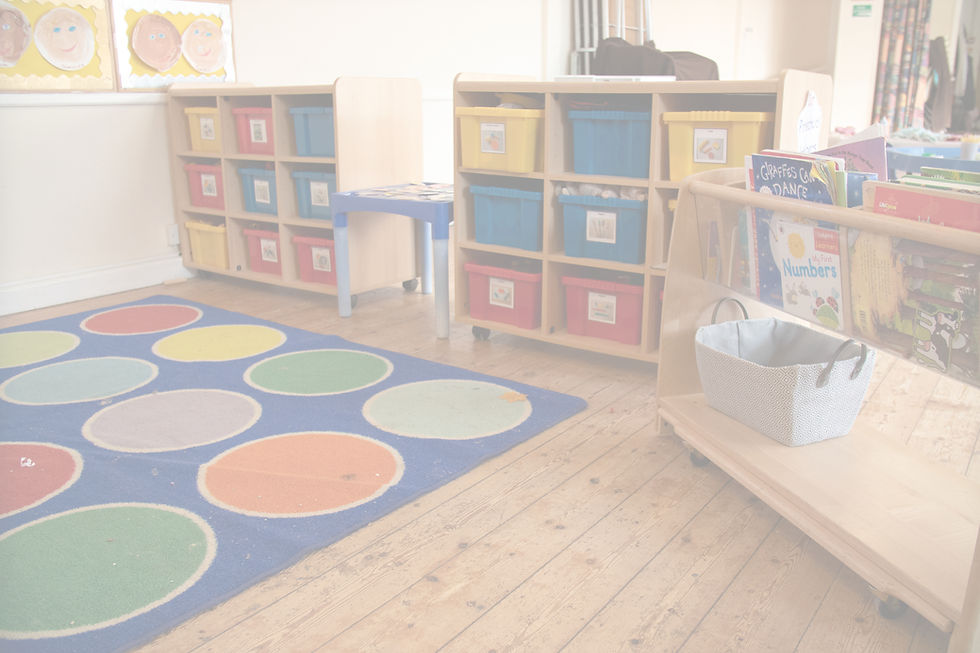
We will work closely with all parents to access any specialist equipment that may be required. The building is fully accessible to a Wheel chair. There is access to an accessible toilet. The setting offers resources, toys and equipment at different levels.
We offer visual timetables to help children make choices, support understanding of the routine of what happens now and next. We have visual signs, photos and aids around the rooms that enable children to make their own choices and access the curriculum independently. We match our teaching styles and differentiate the curriculum so that every child is able to access our provision and make progress. If any family has English as a second language, we can access resources and translations from the Essex Equality & Inclusions officer. We would ensure that we would respect your cultural differences & negotiate to meet your needs in an appropriate way.
10. How will Wivenhoe Pre-School prepare and support my child to join the pre-school or transfer to a new setting or school?
Before starting pre-school – Before your child joins the Pre-School we encourage you to visit the setting (more than once if necessary) so that you and your child can become acquainted with the environment. We will offer you a home visit if required. You will be asked to complete an All About Me booklet maybe a One Page Profile which shares information from home. A care plan will be devised with the parent/carer and key person/SENCo. We work closely with each family to develop a settling in routine to match your child’s needs. With your consent, we will liaise with any professionals that are already working with your family. If your child attends another setting, with your consent we share information about your child’s time with us through written information and visits to settings. We welcome other settings to visit us.
Leaving to attend another setting. We will write a leavers report with information on your child’s development and time with us, we are happy for other settings to visit your child while they are still at our setting and we share appropriate information with them. Before starting school When transferring to school, the pre-school will initially liaise with the school to arrange the best transition for your child. This could include a meeting between the school, pre-school and parents to discuss the best strategies to support transition; several visits to the school by your child; photographs of the school; (we create a pictorial booklet to support this) and the teacher is requested to visit to the pre-school. If other agencies are supporting your child, they may also be involved with the transition process and work with you to find the best level of support. Sometimes it is agreed that a higher level of support is needed once a child is due to start primary school. In this case, a request for an assessment can be made to the Local Authority for an Education and Health Care Plan (EHCP) The request can be made from either you, other agencies such as a specialist teacher or by the staff at the preschool. You may not feel an EHCP is required and that the primary school may be able to meet the child’s needs with the resources they have. Occasionally an Individual Pupil Resourcing Agreement {IPRA} funding can be issued to the primary school. This enables the primary school to support the child’s needs until further evidence is gathered and considered. Once further evidence is gathered the child’s case may then be reconsidered for an Education and Health Care Plan.
11. How are parents involved at Wivenhoe Pre-School? How can I be involved?
Wivenhoe Preschool is a charitably run limited company, this means Wivenhoe Preschool is not run as a business to make a profit, but by a committee of Parents for the benefit of the community. All income generated after running costs is put back into preschool to improve the environment for the children at the setting. Wivenhoe Preschool cannot run or even exist without a committee! Parents/carers can email or phone us directly. Parents/carers are also encouraged to have ongoing dialogue with their child’s key person. There is also a termly newsletter for parents/carers as well as a regularly updated website and Facebook page. Our committee meet termly, sometimes more frequently, to discuss how to improve the preschool and enjoy such evenings as a quiz nights, activity walks and fetes. Parents are encourage to join our committee and become involved in the setting, helping to fundraise, make decisions and support our preschools to make improvements.
12. How are Wivenhoe Preschools resources allocated and matched to children’s special educational needs?
We are a registered charity with limited funds, however we are able to apply for funding from Essex County Council to support individual children via an inclusion grant as required. We would also ensure Staff attend any specific training necessary. We have access to the Colchester Toy Library & ICE resources. http://essexice.co.uk/
We have access to the Essex Local Offer www.essexlocaloffer.org.uk/ Government funding is available for 2 year olds in receipt of Disability Living Allowance.
At times we are able to support your child further by accessing some specific additional SEN premium This premium is allocated to children with the most complex needs and children that need high levels of additional adult support.
13. How is the decision made about what type and how much support my child will receive?
The Manager and SENCO will work closely with you and other professionals to determine your child’s needs. We have regular team meetings to involve all practitioners with any support required. In addition the key person will be able to identify any additional support through the observation procedure required by the Early Years Foundation Stage and any personalised plan linked to a graduated approach will be made as necessary. We are able to sign post parents and carers towards support groups available in the area and are happy to share ideas, intervention strategies and plans that can be used in both the setting and at home.
14. Who can I contact for further information?
More detailed information is available in our policies;
Achieving Positive Behaviour, Administering Medicine, Food and Drink, Managing Children with allergies, Sickness or Infections, Parental Involvement, Valuing Diversity and Equal Opportunities, Supporting Children With Special Educational Needs and Disabilities and Working in Partnership with Other Agencies.
All of our policies can be found in the policies area on our website.
If you would like to discuss your child prior to starting at Wivenhoe Preschool, please contact the Manager – Samantha Clubb on 01206 693115 or email wivenhoepreschool@hotmail.com
Once your child has registered at Wivenhoe Pre-School they will be allocated a key person to support them and you will be able to discuss any concerns or progress with them as well as the Manager or SENCO.
Documents used to support our Local Offer Special Educational Needs and Disability Code of Practice: 0 to 25 years. January 2015
https://www.gov.uk/government/uploads/system/uploads/attachment_data/file/398815/SEND_Co
de_of_Practice_January_2015.pdf
The United Conventions on the Rights of the Child
http://www.unicef.org/rightsite/files/uncrcchilldfriendlylanguage.pdf
The Statutory Framework for the Early Years Foundation Stage. April 2017
https://www.foundationyears.org.uk/files/2017/03/EYFS_STATUTORY_FRAMEWORK_2017.pdf
Working Together to Safeguard Children March 2015
https://www.gov.uk/government/uploads/system/uploads/attachment_data/file/419595/Working_Together_to_Safeguard_Children.pdf
Equality Act 2010
http://dnn.essex.gov.uk/Portals/49/Documents/Business/Equality%20Act%202010%20Summary%20Guidance%20for%20Settings.pdf